Canada budget introduces RRSP for life tax incentives
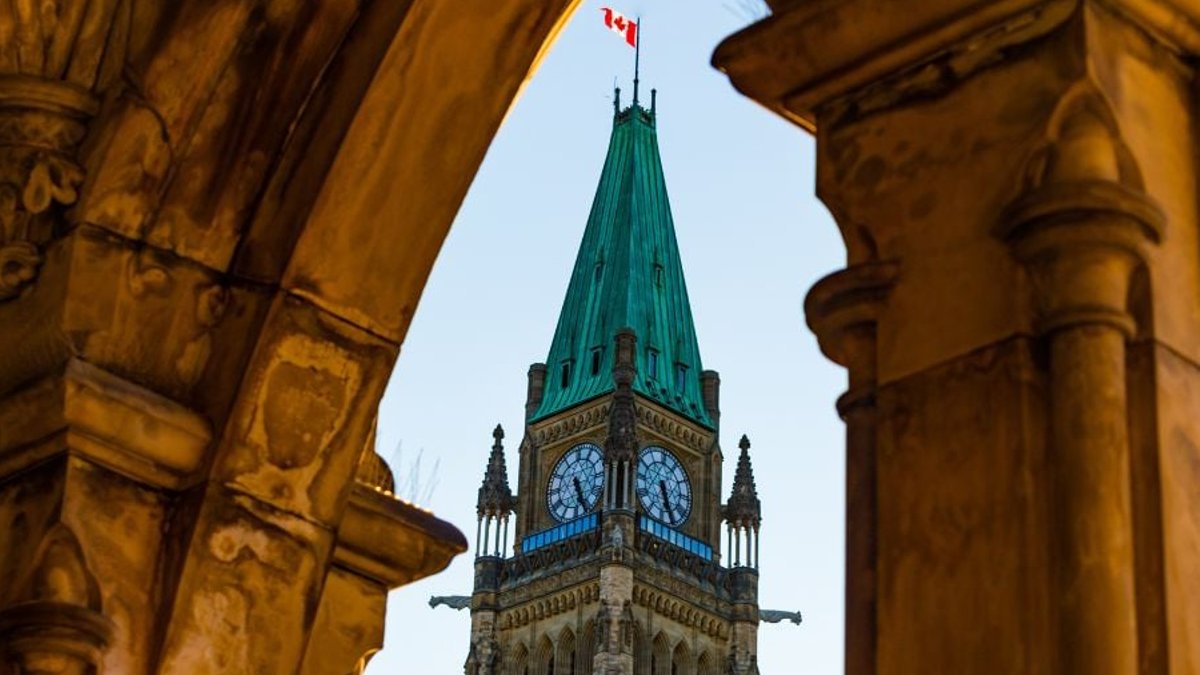
Budget 2026 was delivered to the House of Commons on Nov. 5, 2026 under the title “Masters of Our Destiny.” Finance Minister François-Philippe Champagne announced $142.1 billion in new measures over five years, while keeping personal and corporate income tax rates unchanged.
The plan includes five proposals that will appear directly on advisor client files. No adjustment to the capital gains inclusion rate was noted.
RRSP for life eliminates forced conversion
The budget removes the requirement to turn a registered retirement savings plan into a registered retirement income fund at age 71. The new “RRSP for life” merges core features of the two plans, but minimum withdrawals after 71 stay the same.
It also lets a surviving spouse or common-law partner become a successor holder, simplifying tax-free transfers after death. The proposal leaves two questions open: how a successor holder would be built into the rules and whether indirect rollover provisions could be replaced with direct tax-free transfers.
Doug Carroll, tax and estate specialist at Aviso Wealth, told The Globe and Mail the change would spare Canadians the paperwork of converting accounts without affecting withdrawal obligations.
Read Also: Canadian SMEs Seek Tariff Relief Amid Economic Uncertainty
Deposit insurance boost and new capital gains incentive
The Canada Deposit Insurance Corporation Act would be amended to raise the deposit insurance limit to $250,000 and to remove the cap entirely for eligible deposits held in registered and tax-free accounts. Temporary high-balance coverage would apply after events such as a home sale, and a review of the framework would be required every ten years.
Under the new Canada Growth Incentive (CGI), a Canadian-resident individual could claim a $15 million capital-gains exemption on qualifying shares of a Canadian-controlled private corporation. The corporation’s combined asset value must stay below $100 million before and after issuance, and sectors such as financial services, real estate, utilities, resources, accommodation, arts, professional practices and consulting are excluded.
Dan Kelly, president of the Canadian Federation of Independent Business, said the CGI could help reverse the decline in new business formation.
For most founders, the exemption means retaining nearly 96 percent of a $15 million gain, compared with 71 percent under previous rules. That shift could make early-stage equity more attractive and reduce the tax drag on exit strategies.
Budget 2026 also moves the individual tax filing and balance-due date to May 15 for all taxpayers, including the self-employed, beginning with the 2027 taxation year.
Tax instalment thresholds rise from $3,000 to $7,500 for non-Quebec residents and from $1,800 to $4,500 for Quebec residents starting in 2028, with both amounts indexed to inflation. The Form T1135 foreign-property reporting threshold doubles from $100,000 to $200,000 for years ending after 2026.
Read Also: Canadian investors struggle with understanding alternatives
The Department of Finance is accepting written representations on the “RRSP for life” proposal until Jan. 8, 2027.
Regulatory Adjustments and Interaction Between CGI and Lifetime Capital Gains Exemptions
Merging the rules could require changes to the federal Pension Benefits Standards Regulations, 1985 and similar provincial legislation. Funds transferred out of a pension plan are subject to locking-in restrictions. Those funds may have to be held in a locked-in RRIF or RRSP.
Claiming the CGI exemption on corporate shares would limit a qualifying individual’s ability to claim the Lifetime Capital Gains Exemption on the same shares. The reverse limitation also applies.
Deposit insurance framework changes
The legislation also introduces temporary high-balance coverage triggered by major life events such as a home sale, ensuring additional protection when balances surge.
This shift consolidates separate filing schedules into a single national date.


