
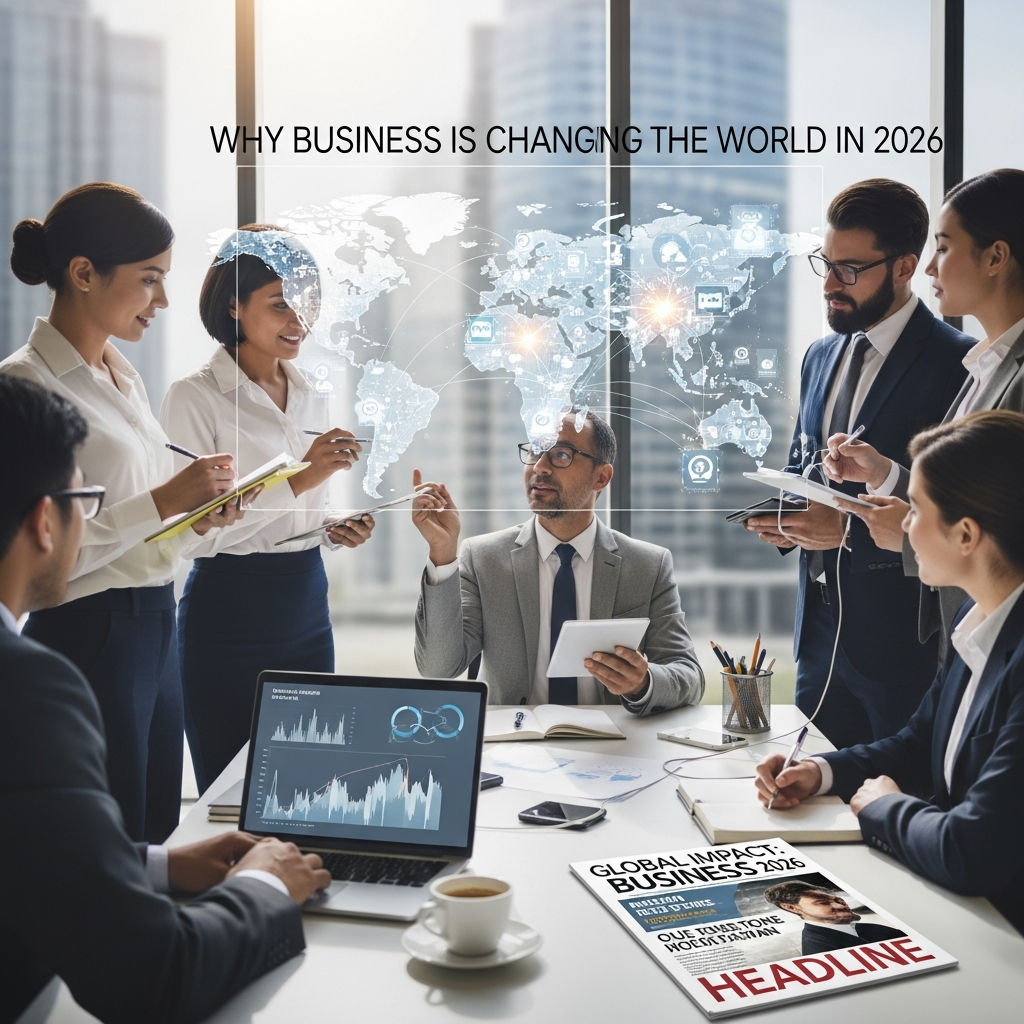
Why Business is Changing the World in 2026: A Blueprint for Global Transformation
The year 2026 is not just another mark on the calendar; it represents a pivotal point where the cumulative impact of rapid technological advancements, evolving societal values, and unprecedented global challenges coalesce to redefine the role of business. Far beyond the traditional pursuit of profit, businesses are increasingly emerging as the primary architects of global change, driving innovation, shaping cultures, and solving some of humanity’s most pressing problems. This isn’t merely an evolution; it’s a revolution where purpose-driven enterprises are fundamentally altering our world.
From the intricate workings of the global supply chain to the hyper-personalized experiences of individual consumers, the influence of business permeates every facet of modern life. In 2026, this influence will be amplified, characterized by a dynamic interplay of disruptive technologies, a heightened demand for ethical practices, and a workforce empowered by flexibility and purpose. Understanding these forces is crucial to grasping how business is changing the world in 2026 and beyond.
Key Drivers of Business-Led Change by 2026
The transformation we’re witnessing is multifaceted, driven by several interconnected forces that are compelling businesses to innovate, adapt, and lead in ways previously unimaginable.
1. Technological Leaps and Digital Transformation
By 2026, the digital revolution will have matured into an era of pervasive intelligence and connectivity. Artificial Intelligence (AI), the Internet of Things (IoT), advanced automation, and the burgeoning metaverse will not just optimize existing processes but create entirely new industries and possibilities. Businesses are leveraging these technologies to address complex issues, from healthcare diagnostics to climate modeling, and to deliver unparalleled customer experiences.
- AI and Machine Learning: Revolutionizing data analysis, predictive modeling, and automation across sectors, leading to efficiency gains and innovative product development.
- IoT and Smart Infrastructure: Creating hyper-connected environments that optimize resource management, urban planning, and personalized services.
- Blockchain and Web3: Enhancing transparency, security, and decentralization in supply chains, finance, and digital ownership, fostering trust in global transactions.
- Advanced Robotics and Automation: Freeing human capital from repetitive tasks, enabling focus on creativity, strategy, and complex problem-solving.
2. The Rise of Sustainable and Ethical Business Models
Consumer demand, investor pressure, and regulatory frameworks are pushing businesses towards unprecedented levels of environmental, social, and governance (ESG) responsibility. In 2026, sustainability is no longer an optional add-on but a core strategic imperative. Businesses that fail to integrate ethical practices and environmental stewardship into their DNA risk irrelevance.
- Circular Economy Principles: Redesigning products and supply chains to minimize waste and maximize resource utilization, fostering regenerative systems.
- Renewable Energy Adoption: Accelerating the transition away from fossil fuels, with businesses investing heavily in green energy solutions and carbon reduction technologies.
- Social Impact Initiatives: Embedding community development, fair labor practices, and diversity, equity, and inclusion (DEI) into corporate strategies, addressing societal inequities.
- Transparency and Accountability: Using technology to track and report on ethical sourcing, environmental footprint, and social contributions, building trust with stakeholders.
3. Reshaping the Global Workforce and Talent Landscape
The nature of work itself is undergoing a profound transformation. Remote and hybrid work models are now standard, and businesses are focusing on flexibility, employee well-being, and continuous skill development to attract and retain top talent. This shift is democratizing access to global talent pools and empowering individuals like never before.
- Flexible Work Arrangements: Prioritizing work-life balance and autonomy, leading to increased productivity and employee satisfaction.
- Upskilling and Reskilling Programs: Investing in continuous learning to equip employees with the skills needed for emerging technologies and evolving job roles.
- Diversity, Equity, and Inclusion (DEI) as a Business Imperative: Recognizing that diverse teams drive innovation and better business outcomes, leading to more inclusive hiring and promotion practices.
- The Gig Economy Evolution: Integrating freelance and contract workers strategically, allowing businesses agility and access to specialized expertise.
4. Hyper-Personalization and Customer-Centric Innovation
Data analytics, AI, and advanced manufacturing allow businesses to offer products and services tailored precisely to individual needs and preferences. This move from mass production to bespoke experiences is transforming sectors from retail and healthcare to education and entertainment, creating deeper customer relationships and driving innovative solutions.
- AI-Driven Product Recommendations: Creating highly relevant and engaging customer journeys that anticipate needs.
- Personalized Healthcare Solutions: From custom medications to tailored wellness plans, leveraging data for preventative and precise care.
- Direct-to-Consumer (DTC) Models: Empowering brands to build direct relationships with customers, fostering loyalty and feedback loops for rapid innovation.
- Augmented Reality (AR) for Enhanced Experience: Allowing customers to virtually try products, visualize services, and interact with brands in immersive ways.
5. Geopolitical Shifts and Supply Chain Resilience
Global events have highlighted the fragility of traditional supply chains, compelling businesses to rethink their strategies. By 2026, companies are prioritizing resilience, localization, and diversification, transforming global trade and fostering regional economic development.
- Nearshoring and Reshoring: Bringing manufacturing closer to home to mitigate risks, reduce transit times, and support local economies.
- Diversified Supplier Networks: Reducing reliance on single regions or suppliers to build more robust and adaptable supply chains.
- Blockchain for Supply Chain Transparency: Providing immutable records of product origins and movements, enhancing trust and accountability.
- Strategic Partnerships: Collaborating with governments, NGOs, and even competitors to address systemic vulnerabilities and foster stability.
6. The Democratization of Entrepreneurship and Innovation
The barriers to entry for starting and scaling a business have significantly lowered, thanks to digital platforms, cloud computing, and global payment systems. This has unleashed a wave of entrepreneurial activity worldwide, allowing small businesses and solopreneurs to have a global impact, fostering competition and rapid innovation.
- E-commerce Platforms: Enabling individuals and small teams to reach global markets without extensive physical infrastructure.
- No-code/Low-code Development: Empowering non-technical founders to build powerful applications and solutions quickly and cost-effectively.
- Crowdfunding and Angel Investment: Providing alternative funding mechanisms for innovative ideas that might not attract traditional venture capital.
- Global Access to Talent and Resources: Leveraging remote collaboration tools to build diverse teams and access specialized expertise from anywhere in the world.
The Tangible Impacts: A Glimpse into 2026
The aggregated effect of these business transformations will be visible across society:
Social Progress and Inclusion
Businesses are actively contributing to closing social gaps, providing access to essential services like education, healthcare, and financial tools in underserved communities. Their focus on DEI within their own structures translates into broader societal inclusivity.
Environmental Stewardship
Corporate investment in green technologies, renewable energy, and sustainable practices is accelerating the fight against climate change and promoting responsible resource management on a global scale.
Economic Growth and New Opportunities
The creation of entirely new industries and job categories will foster unprecedented economic growth, while innovative business models promise more equitable wealth distribution and opportunities for diverse populations.
Navigating the Future: Challenges and Opportunities for Businesses
While the potential for positive change is immense, businesses in 2026 also face significant challenges, including navigating complex ethical dilemmas surrounding AI, managing geopolitical uncertainties, and adapting to ever-evolving regulatory landscapes. Success will hinge on agility, foresight, and a steadfast commitment to purpose beyond profit.
Businesses that embrace these shifts, prioritizing adaptability, ethical innovation, and stakeholder value, will not only thrive but will be at the forefront of shaping a more sustainable, equitable, and prosperous future for everyone. Their ability to integrate technological prowess with a profound sense of social responsibility will define their legacy.
Conclusion: Business as a Force for Good and Global Transformation
In 2026, the narrative of business is fundamentally shifting. No longer can enterprises afford to operate in a vacuum, solely focused on financial returns. Instead, they are becoming indispensable engines of global transformation, driving the solutions to our most pressing challenges and building the framework for a better world. From combating climate change with sustainable practices to fostering inclusive growth through technological innovation, businesses are proving to be powerful catalysts for progress.
The convergence of technological advancement, ethical imperatives, and a globally connected workforce positions business as the most dynamic force for positive change. As we look towards 2026, it’s clear that the companies that lead with purpose, innovate responsibly, and embrace their role as global citizens will be the ones truly changing the world, creating a legacy that extends far beyond their balance sheets.