ETFs become a staple in Australian investing
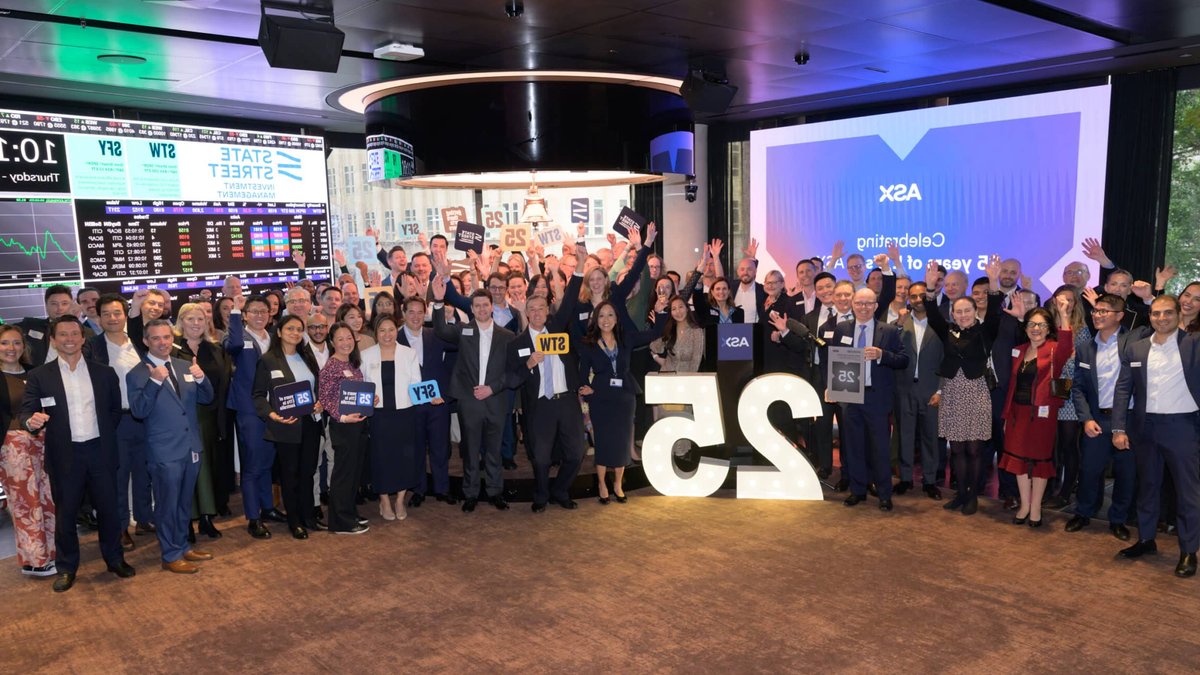
Twenty-five years ago, the launch of ETFs Down Under helped reshape how Australian investors access markets, build portfolios and invest for the future.
From Acronym Confusion to Mainstream
ETFs first hit the ASX in August 2001, when State Street Investment Management launched the State Street SPDR S&P/ASX 200 ETF and the State Street SPDR S&P/ASX 50 ETF. Since listing, the value of a hypothetical $10,000 investment in those products has grown substantially, reaching $70,889 and $68,544 respectively as of 31 July.
“I used to ask new employees if they could tell us what an ETF was,” said Jonathan Shead, head of investment at State Street. “In those early years, nine times out of 10, we would get ‘electronic transfer of funds’ – EFT, right? Whereas now, my adult children know what an ETF is. And to me, that indicates a little seismic shift.”
Shead has been there since the beginning. He recalls the acronym confused more than the average Aussie in those early days.
Related: Small caps reveal cracks in Australian market giants
Early Challenges and Market Solutions
The introduction of ETFs in August 2001 helped solve two key issues, according to Shead. “The first was an investor problem, where things like a lack of transparency, high cost and poor liquidity of some products were problems we thought could be solved,” he said. “The second was a technical market-efficiency opportunity where brokers and market makers could fine-tune pricing across futures contracts and underlying physical shares.”
Rory Cunningham, ASX senior manager for investment products, said the evolution didn’t happen overnight. “There’s a lot of people like John that were there at the beginning of the ETF market and they had to work quite hard to figure out how to bring a product structure and make it fit within our rules and regulations,” he said.
One of the biggest hurdles in convincing investors and advisers to adopt ETFs in the early years was infrastructure, as most investors didn’t have broker accounts and advisers were used to dealing with managed funds.
The benefits of passive management were also not widely understood. “A story about the great things an active manager is going to do for you is more humanly appealing than some technical story about arbitrage and passive management,” he said.
Growth and Innovation
As of 31 July, there were 457 ETFs listed on ASX with more than $360 billion in assets, following a record financial year 2026 in which 72 new ETFs were listed, the highest annual total to date.
Related: ETF Popularity Outpaces Investor Confidence
“I’d love to say that I saw this coming, but to be honest, I didn’t,” Shead said. “The number of ETFs has grown as people have found new ways to use them. The early passive, ‘own the whole market’ kind of ETFs have now morphed into owning a part of the market, or a particular style, or a particular geography, and more recently a particular thematic.”
Cunningham said Australia has been both a learner and a leader in the industry over 25 years. “For example, active ETFs – we have a very flexible arrangement for the ability for active managers to come onto the ASX in an ETF wrapper, still protect their intellectual property, and we were one of the first markets in the world to take that approach,” he said.
Shead believes international equities have had the most impact on investor consciousness. “Because all of a sudden you could get instant exposure to the US, settling in Australian dollars in an Australian time zone,” he said.
One of the biggest misconceptions around ETFs, according to Shead: “Once we got past ‘electronic funds transfer’, the biggest misconception is that an ETF is an investment strategy. People say, ‘What’s your investment strategy?’ – ‘I buy ETFs.’ That’s like going on a shopping trip, going to a department store and buying a box. Well, that’s a meaningless exercise. You need to know what is inside the box.”
Related: ASX weighs extended trading hours
The biggest drivers of growth, according to Shead, are lower cost, transparency, technology and financial education. “Something else that has been key has been the emergence of competitors, much as I hate to say,” he added. “I think when advisers and investors saw that there were major global financial firms wanting to launch ETFs, they realised that there was something to see here.”
A Quarter- Century Legacy
Shead, who is retiring on 28 August, reflected on what became a huge chapter of his career. “The thing I’m most proud of is that this is a financial product that has a three-letter acronym that promises to do wonderful technical things, and it’s delivered what it said it would do. And it’s delivered what it said it would do through the financial crisis, through the European sovereign debt crisis, through Brexit, through COVID,” he said.
“The fact that ETFs have delivered on their promise is a tremendous credit not only to State Street, but to the wider ETF industry as well,” Shead said, adding it was also a credit to the ASX and ASIC “who have been pretty diligent watching this industry emerge and making sure that appropriate guardrails are in place.”
“I’m incredibly proud of what State Street has achieved in the last 25 years, and I’m proud of the industry and the way the industry has been both innovative and responsible, and how products have been developed,” he said. “It takes a village to run an ETF. There’s a whole village within the financial community that has worked over the last 25 years to make this product available. And it’s nice to be able to say the financial services industry got one thing right.”

Small caps reveal cracks in Australian market giants


