Oil exporters face unexpected economic strains
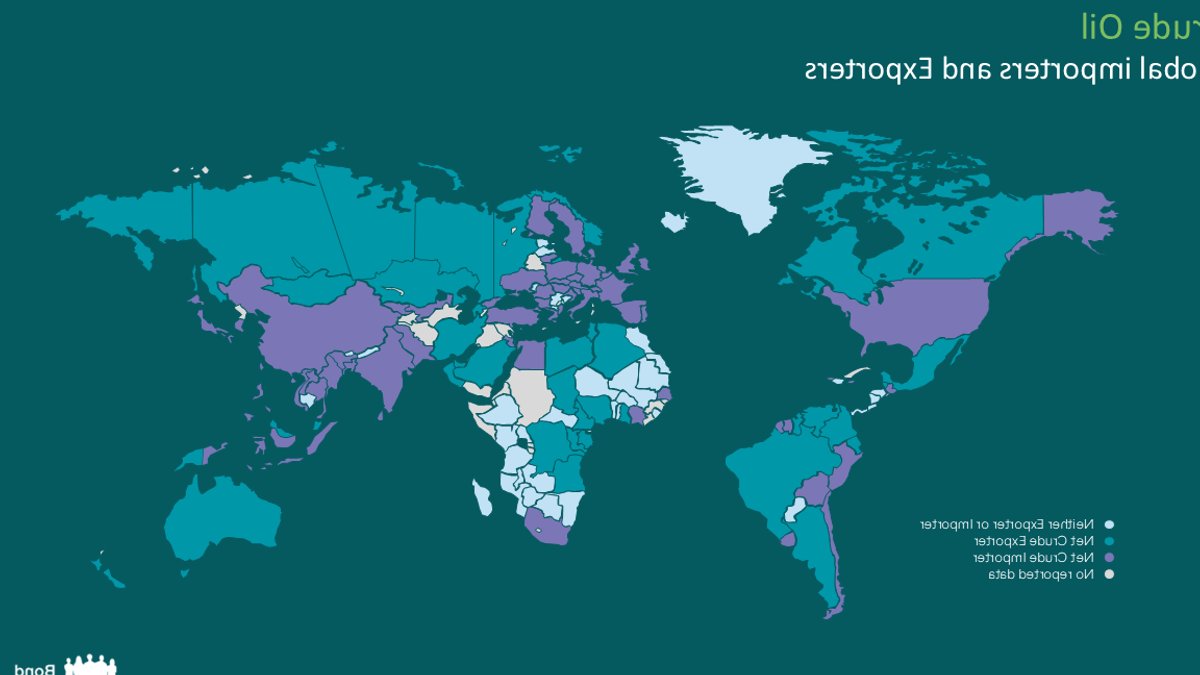
With crude prices hovering around $100 a barrel — plus or minus 10% — bond investors have been rapidly repricing as they assess the impact of oil on inflation, monetary policy and trade balances across developed and emerging economies. The World Bank provides a useful reference for identifying which countries are net crude oil exporters or importers. At a high level, Asia and Europe appear to be the regions most affected by a higher oil price environment.
Some Asian central banks, including those in Indonesia and the Philippines, have already started to hike rates. While Asian economies generally have solid credit buffers, the fiscal cost may soon bite after most countries implemented fuel subsidies. The longer-term implications for growth remain unclear, especially given travel restrictions and working-from-home measures. In Europe, most temporary relief measures such as VAT cuts and targeted support have been extended, with fiscal implications for already cash-strapped governments. The United States has mainly released oil reserves to increase supply, with no meaningful household subsidy measures.
Related: Comcast Split Attracts New Suitors
Not all crude exporters come out ahead
On the other end of the spectrum, emerging market economies outside of Asia appear to be net beneficiaries — but not all. Net oil importers such as Egypt, Turkey and South Africa are facing challenges. Latin America, the Middle East and Africa contain an overwhelming number of countries that are either net crude oil exporters or have a balanced imports/exports profile. Nigeria, Angola, Ecuador, Colombia and Venezuela have all seen their sovereign bonds outperform since the start of the Iran war, as higher crude prices should support fiscal and external balances.
However, not every net crude exporter becomes a winner with rising oil prices. A country’s direct exposure to oil prices is determined by two key factors: the oil trade balance and crack spreads. The oil trade balance is the net balance between crude imports/exports and refined oil products such as gasoline, diesel, kerosene, fuel oil and LPG. Some countries are large crude exporters but lack sufficient refining capacity to meet domestic demand — Mexico is one example. Others have large domestic refining capacity but remain significant crude importers, like India.
Crack spreads represent the difference in price between refined products and crude oil, essentially refiners’ profit margins. The term comes from “cracking,” the refining process where crude oil is broken down into different petroleum products. Crack spreads have increased significantly since the closure of the Strait of Hormuz, as refined product supply response is structurally more constrained than crude. Diesel cracks rose sharply and jet cracks spiked to record highs in March, leading airlines to cancel thousands of flights. While crack spreads have since retreated from their extreme peaks, they remain well above historical levels.
It is worth stepping back here to consider a plausible near-term scenario. If crack spreads stay high and crude prices remain raised, the gap between crude exporters with refining capacity and those without will only widen. Countries that can process their own crude and export refined products could see double benefits, while those forced to import gasoline and diesel may find their trade balances eroding faster than simple crude export numbers suggest. That dynamic is not yet fully priced into sovereign bond spreads, and investors may need to look past headline crude export data to assess real exposure.
Refining capacity changes the calculus
A chart from the World Bank shows which countries are net exporters or importers of refined oil products — and it looks very different from the crude trade map. Asia and Europe still appear vulnerable, being net refined oil importers on top of their net crude importer status, and are clearly among the biggest losers in a higher oil price environment. However, Latin America and Africa are also largely net refined product importers, despite being net crude oil exporters on balance.
When crack spreads widen, the imports bill for refined products rises more rapidly than export revenues, worsening the trade balance. This dynamic is most acute in countries with limited domestic refining capacity and strong growth in transport fuel demand. Mexico is one of the largest crude exporters in the world, but it spends significantly more to import refined products, resulting in a large oil trade deficit — $25 billion in 2025 and $6.6 billion in the first quarter of 2026, according to Banxico. To a lesser extent, Ecuador, also a net crude exporter, has a large diesel imports bill due to insufficient refining capacity, which significantly reduces its oil trade surplus.
Related: The Impact and Vision of pafikotatambua.org
Conversely, the United States displays a net positive oil balance, as its large net refined product exports far exceed its relatively small net crude imports. With widening crack spreads, Mexico’s oil trade deficit should widen, while the U.S. should become a net beneficiary. Crude exporters and importers do not automatically benefit or suffer from higher oil prices.
While not all crude exporters are winners in the current environment, some countries nonetheless stand out as clear beneficiaries — particularly full-chain exporters. Those with an integrated upstream, refining and exports profile benefit from both higher crude prices and widening crack spreads, such as Saudi Arabia and Russia. Geopolitics aside, they are the real “cracking” winners should high oil prices persist.

Comcast Split Attracts New Suitors


