US imposes smoke tax on Canadian goods
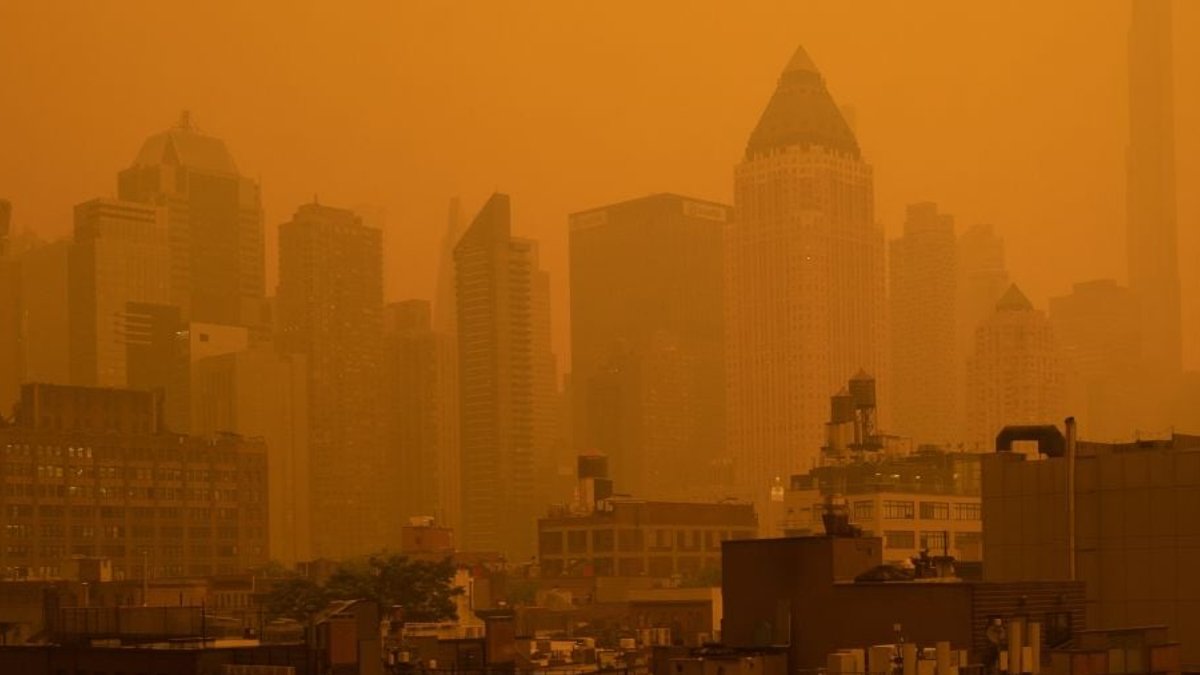
The US has set a global precedent by imposing a ‘smoke tariff’ on Canada, marking the first time a great power has demanded a price for transboundary climate-driven harms. As smoke from hundreds of Canadian wildfires turned skies orange across much of the US, President Donald Trump responded with a demand for accountability, declaring that America had been “unnecessarily invaded” by Canadian pollution.
Climate Change and Global Security
The Canadian government was accused of being negligent in forest management and should therefore face higher tariffs. This move has significant implications for global security and trade, as it marks the first international climate security conflict between two G7 economies.
Canadian Prime Minister Mark Carney has spent a decade as a prominent voice on climate matters, warning of the “tragedy of the horizon” and giving the financial industry permission to treat climate change as a source of financial risk. However, as prime minister, he faces pressure from a domestic coalition demanding expanded oil and gas production, and from the US administration that is brandishing tariffs to demand more extraction.
Related: Foreign firms push for Philippines reforms
Consequences of Climate-Driven Harms
The US-Canada dispute shows that science will not adjudicate climate-related costs, which instead will be used by whoever holds power. The smoke is Canadian, the carbon is global, and the tariff is American. It is a pattern that will be familiar to developing countries, which have long been affected by climate change despite contributing little to the problem.
In 2019, the G20 halted multilateral funding for oil and gas exploration in developing countries, ignoring the consequences for growth in these countries. The US-Canada dispute marks the opening of a new era, as physics guarantees more climate-driven disasters that respect no borders.
India, Pakistan, and China all share Himalayan-fed rivers, while six countries contest control over the Mekong River’s flows. Senegal is absorbing ever more Saharan dust from Mauritania, and displaced peoples are constantly pressing on Europe. Each of these situations represents a potential dispute waiting to be addressed.
Priorities for Policymakers
Policymakers should focus on three priorities to address the issue of climate-driven harms. The first is to treat climate resilience as a form of shared security, investing in fire management, watershed protection, and grid resilience. The second priority is to establish a common machinery for assessing transboundary climate harms, grounded in science rather than leverage. This will help them make informed decisions.
Related: Designing a Seamless Automation Workflow within Your Workflow System
The third priority is to prevent sovereignty claims from being pitted against decarbonization, instead promoting efficient carbon markets that link emissions, market access, and climate-adaptation finance and investment.
It remains to be seen what governments will do.
The world’s first climate-security fight does not inspire confidence, but there is still time for governments to find a better answer than billing each other at the border. As the harms mount, governments must act to address the issue of climate-driven harms and promote a more sustainable and equitable future.


