AI drives surge in high-yield investments
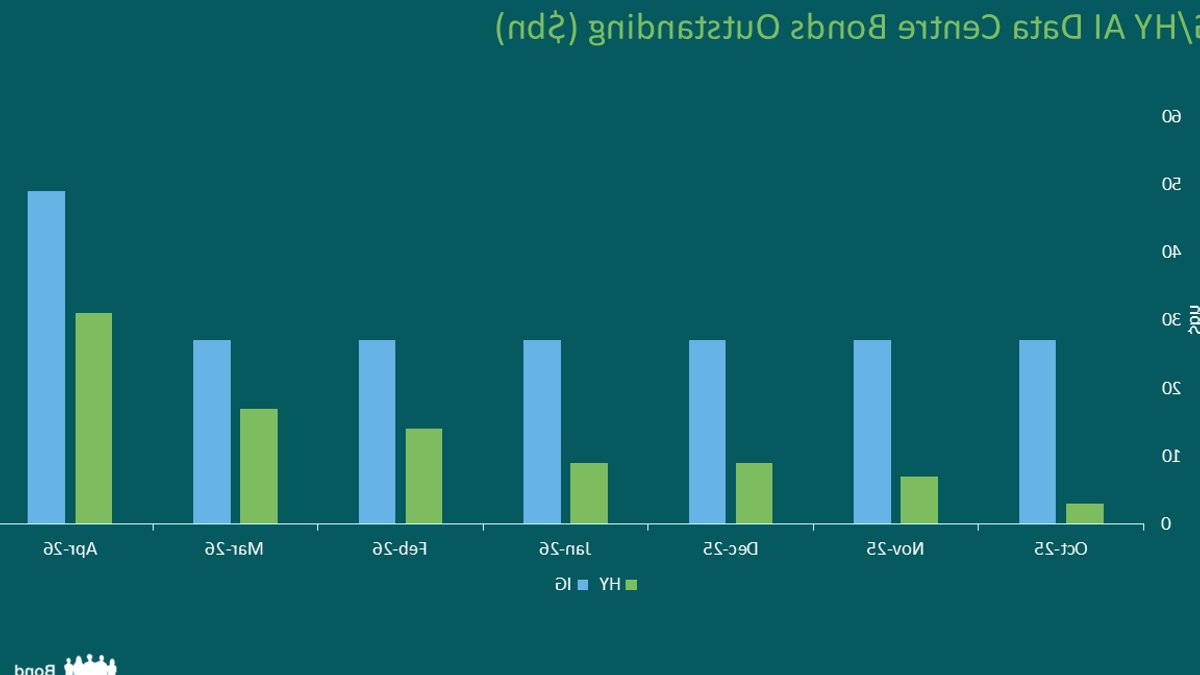
The high-yield bond market is developing a new segment driven by artificial intelligence demand.
AI’s need for computing power has sparked a financing surge, with data centers at its core. Since early last year, nearly $40 billion in high-yield bonds have funded these facilities, up from almost none. About $30 billion of that total appeared in the first half of this year.
An emerging subsector takes shape
The increase has formed a distinct category within high-yield debt. These AI-related bonds now make up 1.6% of the Global High Yield Bond Index and 2.6% of the U.S. version. Analysts predict that share will rise to 4%–5% globally and 6%–7% domestically within a few years, matching long-standing sectors like retail and capital goods.
That scale, along with yields above the broader index, makes the sector difficult for fund managers to overlook. It has also prompted analysts, strategists, and portfolio managers to quickly learn about a market that barely existed 18 months ago.
Fifteen high-yield data-center bonds totaling $39 billion are now outstanding, excluding $6.5 billion from neocloud provider CoreWeave. The bonds share some project-finance features—five-year terms with two-year non-call periods, mostly amortizing structures—but differ in other aspects.
Some issuers have financial support from tech giants like Google; others operate without it. Some secure anchor tenants such as Nvidia or hyperscalers like Amazon, Microsoft, and Meta; others depend on smaller clients. Facilities range from single-site operations to multi-jurisdictional projects. Construction timelines vary, with some already operational and others still in early stages. Power supply agreements, lease terms, cost protections, and covenants add further complexity.
Related: LME trade fears impact Arxada stocks
Bubble fears and first-mover advantages
Skeptics compare the trend to the telecom boom of the early 2000s or the energy surge in 2015–2017, when investor enthusiasm outpaced risk evaluation. They caution about potential overbuild, excess capacity, or untested contracts even with strong tenants. If demand disappoints, the sector could face significant challenges.
Advocates argue that compute capacity needs are clear. They note that well-funded tenants like Microsoft or Meta would likely support struggling centers, or that demand is strong enough to fill any gaps quickly. Operational projects or those near completion hold an edge, while capacity concerns mostly affect later developments.
Some investors focus on the “yield to call” opportunity. As projects generate cash, issuers may refinance high-coupon debt at better terms, creating short-term gains. But that strategy relies on the broader narrative holding—betting that AI-driven demand is real and lasting.
Fund managers face a difficult choice. Shorting the sector requires strong confidence it’s overvalued or fragile. Going overweight means accepting a thesis still taking shape. The stakes remain high, and the learning process is rapid.
The push to finance AI infrastructure is reshaping high-yield markets. It’s also forcing investors to reconsider risk assessment in a sector where standards are still evolving. For now, the demand for power—and capital—continues unchecked.
Even Microsoft Word’s spell-check hasn’t adapted, still flagging “hyperscaler” and “neocloud” as mistakes. Investors in Australia’s housing boom face similar pressures as capital flows shift toward AI infrastructure.

Australia’s housing boom faces fresh pressure


